


Part II
THE UNDERGROUND: JR Nyquist suggested that one can freely propagate communism in the US, as long as it is done under a different banner. You use the example of Rich Nagin, who couldn’t be elected as a communist but was extremely effective in organising political campaigns of others, notably John Kerry. Does the word ‘communism’ contain some sort of ‘tabu’ connotations in the US? If so, is it really still the case in the world of Alexandria Ocasio-Cortez and Rashida Tlaib?
TREVOR LOUDON: Communism is still a tabu word in the US for the left, but not so much the right.
The left hates the word because of the stigma of the Soviet Union, Red China, Cuba, Venezuela etc. Even the Communist Party USA which supports both Beijing and Moscow almost changed their name a few years back. Read more ->
Part I
THE UNDERGROUND: Anticommunism is a state of mind, the only constructive stance a decent man can adopt in current political climate. As you put it: “Unless you’re an active anticommunist, you are missing the mark in today’s world.” With so many competing ideologies staking a claim for our undivided attention, it is easy for our powers of reasoning to be perturbed, for common sense and simple decency to become blurred. We all need a compass or grounding. For us, the writings of Józef Mackiewicz provided such grounding. What was your road to anticommunism?
TREVOR LOUDON: My road to anti-communism was through my high school economics teacher. I was a typical NZ socialist as a teenager. Way to the left. He taught me about free markets as a better route to prosperity than state socialism.
I then read authors like Ayn Rand (though I rejected her militant atheism), Bastiat, Leonard Reed, Ludwig von Mises etc. By then I was an anti-socialist, but I had no understanding of the communist movement. I think this is a common failing with many businessmen and free market advocates. They think communism is merely an economic system that can be defeated by better economics. Read more ->
Communism has collapsed.
The Cold War is over.
Soviet union is disintegrating.
Marxism-leninism is dead.
Or at least everyone says so.
All these dramatic changes of such historic importance have apparently been sparked off by the famous “abortive coup in Moscow”. The hardline plotters seem to have sealed the fate of the Cold War and demolished the communist party rule. They’ve killed marxism-leninism doctrine and torn the soviet union apart in one short fit of brilliantly displayed inefficiency, stupidity, drunkenness, indecisiveness and so on and so forth. Read more ->


Almost every detail of the coup was astounding. Although many claim that the very fact of it happening was not at all surprising, both Western sources and Yeltsin’s camp reluctantly admitted that there was no intelligence information about the forthcoming putsch. This astonishing fact escaped the attention of most correspondents, so it must be worth considering. History provides numerous examples of intelligence warnings being ignored; but a lack of any intelligence data before such an event demands a logical rather than historical explanation. Logically, there are three possibilities:
- All preparations were efficiently kept secret;
- All intelligence services involved proved to have been entirely useless;
- There were no preparations at all.
Why didn’t Putin and his cronies simply buy Crimea from Ukraine – at ten cents an acre, like the Americans once bought Alaska from Alexander II of Russia – rather than launch a clumsy and noisy guerrilla war whose public relations outcome was predictable at the outset? The answer, I believe – concealed, camouflaged and biding its time – lies thousands of miles away, in the desert sands of the Middle East. Read more ->
We are publishing an unusual text. In October 2010 we had approached Olavo de Carvalho with a series of questions, which was intended to form a long interview. Mr de Carvalho responded on the 8th November. As agreed earlier, we added some supplementary questions asking him to elaborate on the subject of the São Paulo Forum, as it is little known outside Latin America. By the 16th December, still not having heard from Mr de Carvalho, we proposed that “should he find these additional questions uninspiring, it would be absolutely fine by us and we would publish the interview in the previous format”.
Unfortunately, we have never heard from Mr de Carvalho again. Surprised and disappointed we had to shelf the project, thinking in desperation that our interlocutor simply lost interest. Read more ->
Masha Gessen ends her book about Putin* with an Epilogue, which consists of her diary entries covering a “week in December”. It wasn’t just any week but the week from the 3rd to the 10th December 2011, the week of The Snow Revolution in Moscow. This was the time when, almost in spite of herself, she experienced the restoration of her faith in Russian democracy. It was a time of volatile emotions for Gessen, as high hopes were mingled with fears. She worried at first that the “brewing revolution had no unifying symbol, no slogan” only to rejoice when someone coined the phrase the “snow revolution”. She fretted when a demonstration was moved from “the fabulously named Revolution Square” to a place called Bolotnaya (Swampy) Square… She applauded every good joke told during manifestations, and celebrated that “the goons who were spouting propaganda” from tv screens “started speaking a human language” but then she suddenly remembered that the same journalists sounded human about 12 years earlier, before they became Putin’s goons. Read more ->
The soviet “elections” were rigged. And bears indeed do defecate in the woods. Thousands of young soviet democrats found themselves in Moscow on the election day, as if by magic, and all voted as one and for the same one – many times. They made their camp in the stalinist palace of exhibition of people’s achievement. The polling day started with a massive cyber attack on the websites of a radio station Ekho Moskvy and an independent election monitor; and it ended with 140% turnout and 99.5% support for Putin’s party in some polling stations. Some well intentioned and unbelievably brave individuals tried to stop multiple voting and were thrown out of polling stations. None of this was surprising though, as only extremely naïve observers can attach any significance to soviet elections. And yet, I was amazed by the commentary I’ve read in the latest Economist. The London weekly is one of the best edited magazines in the world, with consistently good writing and a clear political line – clear albeit somewhat confusing for readers not acquainted with it. The Economist sees itself on the right in economic matters but is firmly on the left on social issues. In other words, it is a liberal paper. However, in the last issue we read an article headlined The long life of Homo sovieticus, which is full of unusually accurate analysis of the state of Putin’s “Russia”: Read more ->
Until recently I was of an opinion that the largest Circus performance the world has ever seen took place in December 1989 in Bucharest and in the Romanian provinces. It wasn’t just the little things, like the leader and compére of the “anticommunist” opposition, Ion Iliescu, who turned out to be Gorbachev’s schoolmate; not just the allegedly “independent” juggler and new Prime Minister of the revolutionary Romania, Petre Romanu, who was, amid some confusion, recognised as a representative of “golden communist youth” and as a regular in fashionable communist society salons, an individual painstakingly prepared to take up the mantle of a “perestroika revolutionary”; it wasn’t just the not very democratic way the Ceausescu couple were murdered to avoid any indiscretions on their part. The organisers of the Romanian Circus were so determined to stage their performance that when in mid-December of that memorable year, the populace did not show a satisfactory enthusiasm for the revolution, they decided to crank up the pressure by dragging out of the mortuaries bodies of people who died of extremely natural causes, and presenting them to the media as victims of a communist massacre. Read more ->
Once upon a time, one Czesław Miłosz wrote about Józef Mackiewicz:
We cannot treat seriously everything written by Mackiewicz, the anti-Communist. Some of his essays are obsessive and bordering on paranoia, following a well known pattern of sniffing for agents everywhere, even in the Vatican. When embarking on a compilation of his political writings one would do well to remember that he paid with fantasies and even insanity for constancy of his views.
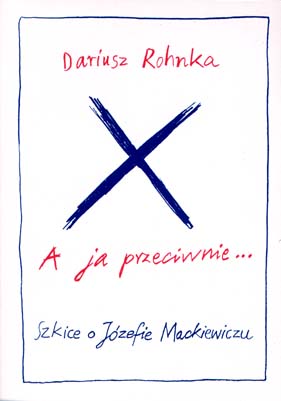
Every part of the above is incorrect but we wouldn’t expect anything else from an apologist of “polish people’s republic”. I do not intend to dignify it with a polemic, it’s enough to say that Miłosz paid with that kind of gibberish for lack of any views whatsoever so what’s there to discuss? What interests me here is the accusation – often repeated – that Mackiewicz “looked for conspiracies”. In reality, Mackiewicz observed, compared, questioned and tried to formulate answers. Is this not a duty of every intellectual? Perhaps not of intellectuals like Miłosz – they prefer to sniff where the wind is blowing from and take up the most convenient position – but real intellectuals, those who see understanding of the world around us as a noble obligation. In line with this calling, Mackiewicz observed; he watched, for instance, how free human beings freely acted in the interests of the greatest enemy of freedom. He compared, for example, the glorification of bolshevik criminals in the free world with the infamy of the Nazis. He posed the question: how could that be? Then he formulated a hypothesis: could it be a plague? Read more ->
Jeff Nyquist replied with his No Substitute to Common Sense to my previous polemic entitled Same Old Nationalism, where I expressed serious concern regarding the substantial change of tone and shift in meaning in his recent writings. I wrote as an attentive reader of his texts but also as a translator and publisher of dozens of his articles; as a political ally and a friend who perceived that some of the paths he had taken were leading him astray. In return a bucketful of swill was thrown on my head; I received in response a load of gibberish, which is not only untrue but also dishonest. No, Jeff, we will not conduct a debate in such fashion! Read more ->
My condolences to the Polish nation following the death of President Kaczyński. It is a sad affair, and suggestive. The plane of the Polish president may one day be thought to represent Europe, which now thinks of mass murder as something belonging to the past.
Now to give an answer to Darek Rohnka. I do not understand his assertion that my thinking has undergone a “transformation, which has recently occurred.” Darek says that I’ve made some kind of irrefutable dogma out of the idea that Saakashvili is opposed to Moscow. In an article, published on his site, titled “Making the Enemy’s Strategic Objectives Intelligible,” I wrote as follows: “If we examine the Georgian events … we see that Moscow needed a reliable partner in Tbilisi who could start the war in a way that later indicated the fault was on both sides – that it wasn’t a simple case of naked Russia aggression.” Read more ->
Jeff Nyquist is not your typical American journalist. He knows Golitsyn, he’s alert to the dangers of a communist plot on a global scale, and to cap it all, he firmly believes that Eastern European revolutions of 1989-1991 were part of a long term strategy, conceived long ago under Khrushchev and Mao. Thanks to such views, Nyquist’s writing appears clear, uncompromising, original and fascinating to the point where it must be rewarding to engage him in a debate on the complexities of the modern world. And bearing in mind the transformation, which has recently occurred in his political thinking, there is indeed a lot to quarrel about. Read more ->
Frontpage Interview’s guest today is Nina Karsov, the head of a London-based company, Kontra, which has been publishing Polish and Russian books since 1970, including the Collected Works (19 volumes in print, but more are planned) by Józef Mackiewicz, a great Polish novelist and political writer (1902-1985).
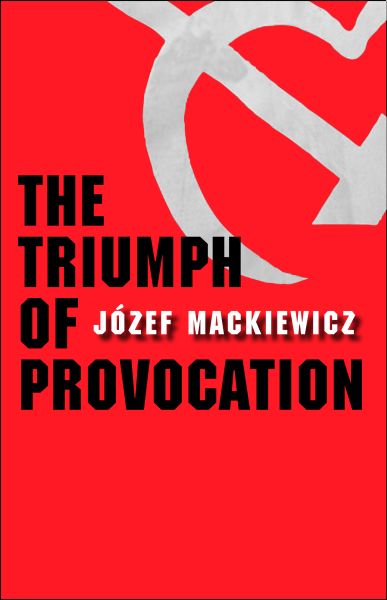
Mackiewicz’s analytical work, The Triumph of Provocation, written in 1962, and now published in English by the Yale University Press, examines the history and nature of Communism as it developed in the Soviet Union and in Poland. His unique interpretation of the differences and similarities between Communism and Nazism is highly relevant to debates about these two systems and to major contemporary issues which are of particular importance to the U.S. and Europe.
On the 10th February 2010 died Charlie Wilson, a colourful member of the House of Representatives, one of the very few American politicians who actively supported the struggle against communist aggression, first in the Seventies in Nicaragua, and then almost throughout the next decade, in Afghanistan. To honour this anticommunist, we are publishing again the article from March 2008 (in an extended version). This text was triggered by a film about Charlie Wilson.
Charlie Wilson’s War is an enjoyable film and, by Hollywood standards, historically accurate to an extent. Directed by Mike Nichols (of The Graduate fame) it tells the story of a democratic congressman from Texas who, in between rowdy parties, cocaine, alcohol, and Playboy Bunnies, thanks to exceptional determination and ingenuity, managed to gradually increase the CIA budget earmarked to help Afghan mujahidin. This in turn, was supposed to have led the soviet army in Afghanistan to such significant losses that there was nothing left for Gorbachev to do but withdraw with his tail between his legs. Read more ->
I am delighted with Michael Bąkowski’s piece, “The Great Provocation,” because it leads us to a discussion touching on the most significant events of the last 18 months. I will now make Bąkowski’s case for him, which is not so strange, because what he presented in “The Great Provocation” is what I’ve been presenting in my work for many years.
With regard to the status of the former Soviet-dominated countries, I had previously written that the “decisive argument for the authenticity of Saakashvili’s revolution in Georgia is found in the Russian military strike of August 2008: The Kremlin displayed its evil intentions and then was forced to abandon its military offensive by Western economic pressure.” Read more ->
To describe the grand machinations of a long term strategic plan, such as the one deployed by the soviets, the English or American writers usually used the term deception, i.e. a piece of trickery, as in magic, which leaves the observer cheated, mistaken or under false impression. This is indeed a good description of the state of mind Western politicians find themselves in when confronted by soviet plots. However, in Polish tradition (and in so far as I’m aware in many other languages) such schemes are described by a different term: provocation. There was a very good reason why Yale University decided to publish Józef Mackiewicz’s seminal work under the title The Triumph of Provocation rather than “triumph of deception”. Read more ->
Michael Bąkowski has explained, very briefly, his hypothesis of how the extended “Final Phase” of the Soviet long range strategy is carried forward in Eastern Europe by a “third echelon” of Soviet leaders: including such figures as Yushchenko, Saakashvili, and Putin. Because of the inevitable decrepitude of old politicians, like Yeltsin and Walesa, Bąkowski believes that the Kremlin was compelled to deploy new politicians, initiating a new round of deceptions. This was necessary because the long range strategy failed to break up NATO by detaching Germany in a timely fashion; so the “Final Phase” of the strategy went into overtime. The Liberal Facade Theater Company of the USSR was tasked with a series of encore performances. Further concessions had to be made to liberalism, capitalism, and to economic survival. Of course, there is danger in necessities of this kind. The former Warsaw Pact countries have joined NATO, and so have three former Soviet republics. If Moscow doesn’t like a political outcome in Eastern Europe, Russian tanks can no longer be called upon to intervene; and, on account of exit polling, electoral fraud carries risks (except in Russia, where the degree of control is maximal). The Soviet bloc has undergone structural changes. These changes were initiated in order to mislead and disarm the Western powers, gaining credits and technology, opening new lines of attack for the future. Napoleon once said that battles can be won by changing formation in the middle of the action. The advantage follows from the enemy’s inability to grasp the reason for the change, which is carried forward in an intentionally misleading way. The vulnerability of the army performing this “change of formation” is very real; but the enemy is taken by surprise, and misinterpreting what he sees, fails to adopt the right counter-strategy. Read more ->
I am puzzled and bewildered by Jeff Nyquist’s views on Russia and the soviet union. To start with, he says that in recent years “Russia has moved backwards, ever closer to the USSR”. That presupposes by inference, that it has moved forward in the past – away from the ussr. My confusion stems from my previous understanding of Nyquist’s position; namely, that the events of the 1989-1991 were a gigantic deception; that the “collapse of communism”, “end of the cold war” and “disintegration of the soviet union”, were all staged and, therefore, did not happen. If we agree that all this never happened, how can we now maintain that Russia is moving closer to something that it has never in the last 82 years ceased to be? I believe that it still is, and always has been, the same old soviet union, which conveniently changed its name and this view seems to me the only logical consequence of my position that the collapse of communism was part of a long term strategic deception plan. From my viewpoint, once we agree on this, any talk of “Russia” is absurd and the idea of her “moving closer or further away from soviet union” immaterial. Read more ->
Jeff Nyquist kindly responded to my previous article with splendid divagations around the importance of common usage when confronted with soviet strategy.
It seems to me that our recent exchange [1] opened up three wide areas of disagreement. First is focused on semantics but, as I see it now, the difference between us is much more fundamental than just our attitude to the semantic obliteration of opposition as a major plank of communist tactics. It actually touches upon the all important question of purpose. Why are we doing this? Why do we bother? Why do we engage in this polemic? Why are we holding on to views, which will not bring us any joy or recognition, and are only likely to be met with a dismissive sign of the forefinger touching the forehead? If “common usage”, thoughtless multitude and even intelligent people, all conspire to see us as crackpots – why inconvenience ourselves to that extent? What for? Read more ->
1. It was drawn to our attention that some of the comments placed here in the last few days did not meet the high standards usually expected of our contributors. Statement to the effect that terms “Russian” and “communist” are synonymous, is below contempt. This is as ridiculous as identifying the terms “Nazi” and “German”, as preposterous as mistaking “Polish” and “anti-Semitic”, as stupid as calling all Ukrainians “rezuns”. Collective responsibility was a big thing with people like Lenin, Stalin, Hitler and Mao. Comments such as those we have seen here recently belong to communist blogs (if there is such a thing) but they are not welcome here. Russo-phobia is every bit as despicable as anti-Semitism or anti-Ukrainian sentiments but first and foremost it is embarrassingly silly. Read more ->
To give a more complete answer to Mr. Bąkowski, I should like to address the apparent inconsistency of my “apology,” where I admit the use of the word “Russia” in place of the word “Soviet,” and end by admitting that this usage is integral to the enemy’s semantic liquidation of anti-communism. Mr. Bąkowski supposes that I have wrongly conceded the enemy’s terminology. He suggests that we must resist this terminology with every weapon at our disposal. In explaining my position, it is best to use a military analogy. The communists turned our flank when they won the semantic battles of 1989-1991. We were pushed from familiar rhetorical ground into a swamp. This was unavoidable, and there was nothing we could do about it. The enemy shifted the ground from beneath our feet. We could not shift it back, because common usage changed, and common usage dictates all discourse. Currently we are undergoing a process in which concepts are realigning with words so that people are attaching old understandings to new labels. When people say “Russian Federation,” they more and more realize it is a dictatorship where dissidents are murdered, where freedom of the press has been suspended, and military preparations are ongoing; and the word “Russia” is shorthand for “Russian Federation.” In common parlance, Russia has moved backward, ever close to the USSR. If the communists are hiding behind “Russia,” their cover is being blown. The deception is losing momentum. It is ebbing away, little by little. When the strategy is fully exhausted, they will be compelled to engage in open warfare. They cannot renew their deception under another set of labels. This is because the deception was carefully prepared decades in advance, and this preparation cannot be replicated. The strategy therefore has a shelf-life. In the last analysis it must be superseded, as Golitsyn said, by the strategy of “one clenched fist.” Read more ->
Jeff Nyquist was kind enough to respond to my previous article. He even offered me a mock apology. Notwithstanding that, I will treat his polemic with utmost seriousness. To my insistence that an anticommunist ought to differentiate between the sinister soviet power and “Russia”, Nyquist replied:
“The Soviet Union is no longer the Soviet Union. Poland is no longer Poland. Do you understand what this means? There is no final political form. And there is no final victory, and no final defeat. What nation, above all others, is better able to receive this truth than Poland?”
My understanding is clouded at best but even I can see the strength of Nyquist’s case: it is surely correct, if a trifle obvious, to say that nothing in human affairs is final (nothing apart from death that is). I confess I know zilch about nations and their relative abilities to receive the truth or otherwise. Simple minded that I am, I still believe that nations do not think for themselves, only individuals do, so being a Pole does not make me “better to receive” anything. The Truth is unattainable to human perception and all we can do is strive for it. Only that much but even that is beyond most – and surely beyond nations. One point in the above citation is certainly true though: that Poland since 1945 has no longer been Poland. And that sad truth still remains unchanged. It seems to me, however, that Poles are somewhat unable to receive this truth – so where does this leave us? I think it leaves me in dire need of being patronised some more. Let’s dig deeper then. Read more ->
Response to Michał Bąkowski
In answer to Michał Bąkowski’s criticism, I offer the following apology. Yes, I am guilty of referring to the Soviet Union as Russia and Russia as Soviet. Up until 1991 common usage permitted this. It is not entirely correct, of course, and if I were compelled to use only immaculate and scientific language, I would use no language at all; for precise and scientific language on this topic does not exist. Political subjects always involve the use of general terms and short-cut expressions, like “democracy” or “freedom.” It is generally assumed that we know what we mean by these words. But general assumptions are often wrong. Let us inquire. What is democracy? What is freedom? There is no precise answer, and men fall into disagreement. One might also ask: What is totalitarianism? And what is Russia, for that matter – and how do we normally designate a country, a power, a government? Do we refer to the Russian government as “the Kremlin”? But the Kremlin is only a citadel. Do we say, with Vladimir Bukovsky, that Russia is ruled by a KGB power? What about the Russian Army, the General Staff, the GRU, the MVD, the red mafia, and those all-pervasive secret structures that form the “underground” of the Communist Party Soviet Union today? Here we find an orchestra, yet Bukovsky fixes his attention on the First Violinist. KGB defector Anatoliy Golitsyn told us, 25 years ago, what music this orchestra was going to play. He told us who the conductor was going to be. He told us that the conductor’s agenda was Communist. Read more ->
I hesitated for some time before writing this. After all, our website has just benefited from what I can only describe as “Nyquist effect”. In one hour we had as many hits as in an average week, in a few days as many as in a month. Well, I guess we should be grateful. On the other hand, however, we are not gambling for popularity stakes; I would even hazard a guess that “popularity” would be somewhat unwelcome for views such as ours, as it could be taken for a sure sign of drifting away from the truth.
In his interview with Dariusz Rohnka, Jeff Nyquist offered us a clear and uncompromising analysis of the current political situation, which in itself is rarer these days than a Catholic priest upholding the Credo (and that is almost unheard of). Nyquist is fearless in his assessments, which in turn leads him to making predictions that many readers could find slightly unnerving. Nevertheless, whenever we find ourselves in agreement we ought to look for the fine points of difference because truth and beauty always lie in the detail. Read more ->



Recent Comments
Trevor Loudon interview
Trevor Loudon interview
Trevor Loudon interview
Trevor Loudon interview
Trevor Loudon interview
Trevor Loudon interview
Trevor Loudon interview
Trevor Loudon interview
Trevor Loudon interview
Trevor Loudon interview
Trevor Loudon interview
Trevor Loudon interview
Trevor Loudon interview
Trevor Loudon interview
Trevor Loudon interview
Trevor Loudon interview
Trevor Loudon interview
Trevor Loudon interview
Trevor Loudon interview
Trevor Loudon interview
Trevor Loudon interview
Trevor Loudon interview
Trevor Loudon interview
Trevor Loudon interview
Trevor Loudon interview
Trevor Loudon interview
Trevor Loudon interview
Trevor Loudon interview
Trevor Loudon interview
Trevor Loudon interview
Trevor Loudon interview
Trevor Loudon interview
Trevor Loudon interview
Trevor Loudon interview
Trevor Loudon interview
Trevor Loudon interview
Trevor Loudon interview
Trevor Loudon interview
Trevor Loudon interview